Pelatihan Digital Mindset untuk Meningkatkan Kompetensi Guru dalam Penguatan Pembelajaran Inovatif dan Berkelanjutan
##plugins.themes.academic_pro.article.sidebar##
Downloads
##plugins.themes.academic_pro.article.main##
Abstract
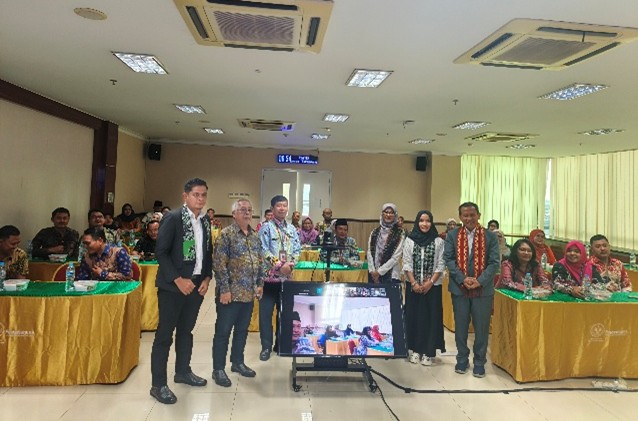
Digital mindset training for teachers is essential in addressing the challenges of learning in the digital era, particularly in improving innovative and sustainable pedagogical competencies. The problems faced include limited understanding of digital mindset concepts, the tendency to use technology at a technical level, and the lack of pedagogically oriented training. This activity aimed to enhance the competencies of junior high school PPKn teachers in DKI Jakarta through digital mindset training. The methods included needs identification, training design and implementation through seminars, interactive discussions, and practical sessions, as well as evaluation using pre-test and post-test. The activity involved 35 participants from the MGMP PPKn SMP. The results showed an increase in understanding, indicated by the rise in average scores from 62.4 to 82.7 and supported by significant t-test results. In addition, teachers’ perspectives shifted toward a more collaborative and pedagogical use of technology. This training effectively improved teachers’ competencies in developing innovative and sustainable learning.
##plugins.themes.academic_pro.article.details##

This work is licensed under a Creative Commons Attribution-NonCommercial 4.0 International License.
JURPIKAT (Jurnal Pengabdian Kepada Masyarakat) accepts manuscripts that have not been published elsewhere and are not under consideration for publication by other print or electronic media. Authors retain copyright and grant the journal right of first publication with the work simultaneously licensed under a Creative Commons BY-NC License that allows others to share the work with an acknowledgment of the work's authorship and initial publication in this journal.
Authors are able to enter into separate, additional contractual arrangements for the non-exclusive distribution of the journal's published version of the work (eg, post it to an institutional repository, in a journal or publish it in a book), with an acknowledgment of its initial publication in this journal.
License to Publish
The non-commercial use of the article will be governed by the Attribution-NonCommercial 4.0 International (CC BY-NC 4.0). The author hereby grants JURPIKAT (Jurnal Pengabdian Kepada Masyarakat) an exclusive publishing and distribution license in the manuscript include tables, illustrations or other material submitted for publication as part of the manuscript (the “Articleâ€) in print, electronic and all other media (whether now known or later developed), in any form, in all languages, throughout the world, for the full term of copyright, and the right to license others to do the same, effective when the article is accepted for publication. This license includes the right to enforce the rights granted hereunder against third parties.
References
Bandura, A. (1997). Self-efficacy: The exercise of control (Vol. 11). Freeman.
Darling-Hammond, L., Hyler, M. E., & Gardner, M. (2017). Effective teacher professional development. Learning Policy Institute, 4(6), 35–48.
Deci, E. L., & Ryan, R. M. (2012). Self-determination theory. Handbook of Theories of Social Psychology, 1(20), 416–436.
Entriza, A. N., & Puspitasari, F. F. (2025). Studi Literatur: Integrasi Teknologi Informasi Dalam Pelatihan Guru Sebagai Upaya Meningkatkan Kualitas Pembelajaran. Al-Idarah: Jurnal Kependidikan Islam, 15(1), 62–73.
Ertmer, P. A., & Ottenbreit-Leftwich, A. T. (2010). Teacher technology change: How knowledge, confidence, beliefs, and culture intersect. Journal of Research on Technology in Education, 42(3), 255–284.
Fadhilatunnisa, A. S., & Bahrudin, F. A. (2026). Peran Guru Dalam Mengembangkan Kemampuan Berpikir Kritis Siswa. MENDIDIK: Jurnal Kajian Pendidikan Dan Pengajaran, 12(1), 66–72.
Falloon, G. (2020). From digital literacy to digital competence: the teacher digital competency (TDC) framework. Educational Technology Research and Development, 68(5), 2449–2472.
Fitria, I. (2025). Guru Sebagai Fasilitator Digital: Membangun Kompetensi Pedagogik. Manajemen Pendidikan Mi/Sd: Berbasis Teknologi Dan Neurosains Dalam Kurikulum Merdeka, 233.
Fullan, M. (2016). The new meaning of educational change. Teachers college press.
Hadi, H., & Al Idrus, A. J. (2025). Inovasi kurikulum PAI: Harapan dan realita di era digital pada sekolah menengah. Jurnal Ilmiah Pendidikan Citra Bakti, 12(1), 217–229.
Hargreaves, A., & Shirley, D. (2012). The global fourth way: The quest for educational excellence. Corwin Press.
Holmes, W., Bialik, M., & Fadel, C. (2019). Artificial intelligence in education promises and implications for teaching and learning. Center for Curriculum Redesign.
Humam, M. S., & Hanif, M. (2025). Strategi pembelajaran aktif dalam meningkatkan keterampilan kritikal siswa di era modern. Jurnal Bintang Pendidikan Indonesia, 3(3), 89–108.
Japar, M., Hermanto, Muyaroah, S., Sila, H. R., & Alfani, H. (2023). Digital Literacy-Based Multicultural Education through Civic Education in Indonesian Junior High Schools. Journal of Social Studies Education Research, 14(4), 364–386. https://jsser.org/index.php/jsser/article/view/3043
Japar, M., Maman, H., Situmorang, R., & Djunaidi. (2025). Inovasi Pembelajaran dan Keterampilan Abad 21. Damera Press.
Kaharuddin, A., Salmawati, S., Syam, N., Sukmawati, S., & Umar, U. (2025). Pemberdayaan Guru: Pelatihan Hologram 3D Tingkatkan Self-Efficacy sebagai Fondasi TPCK-S. Madaniya, 6(4), 2472–2480.
Kesuma, M. I. J., Fatoni, I., Ajir, I. C., Yazdi, M. I. K., Pahrudin, A., Murtadho, A., & Rinaldi, A. (2025). Transformasi pembelajaran pendidikan agama Islam berbasis teknologi digital di era society 5.0. Pendas: Jurnal Ilmiah Pendidikan Dasar, 10(02), 306–317.
Kholik, A. K., Yuliyaningsih, P., Mahnun, N., & Rusli, R. K. (2024). Implementasi Capacity Building Dalam Pengembangan Kompetensi Guru Pada Sekolah Ramah Anak: Kajian Kualitatif di Sekolah Menengah Atas. Jurnal Administrasi Pendidikan Dan Konseling Pendidikan, 6(2), 104–113.
Koehler, M., & Mishra, P. (2009). What is technological pedagogical content knowledge (TPACK)? Contemporary Issues in Technology and Teacher Education, 9(1), 60–70.
Kolb, D. A. (2014). Experiential learning: Experience as the source of learning and development. FT press.
Kurniawan, S. (2025). Literasi Digital Untuk Abad Ke-21. Pustaka Aksara.
Li, H. (2025). Integrating ICT in education: A scoping review of pre-service teachers’ ICT beliefs. Plos One, 20(2), e0317591.
Miles, M. B., Huberman, A. M., & Saldana, J. (2014). Qualitative Data Analysis: A Methods Sourcebook. SAGE Publications.
OECD. (2021). Teachers and school leaders as lifelong learners: The importance of digital mindset. OECD Publishing.
Prensky, M. (2010). Teaching digital natives: Partnering for real learning. Corwin press.
Putranto, I., Kusworo, K., ZN, S. A., Nursafitri, S., Kharismawan, B., & Andriani, P. (2025). Penguatan kompetensi pedagogik guru dalam meningkatkan kualitas pembelajaran untuk mewujudkan pendidikan berkualitas berkelanjutan di smk l’pina, jakarta timur. Indonesian Journal of Society Engagement, 6(2), 148–161.
Putri, L. R., & Haifaturrahmah, H. (2025). Tantangan dan kesulitan pendidik pada masa kini. Action Research Journal Indonesia (ARJI), 7(4), 3049–3067.
Rany, R. M., Lusiana, E., & Perdana, F. (2025). Peran Literasi Digital dalam Meningkatkan Kemampuan Berpikir Kritis di Era Teknologi Informasi. Philosophiamundi, 3(4), 47–56.
Raprap, W. P., Ngabalin, M., Camerling, L. Y., Wahono, T. R., Subekti, P. A., Zega, T. F., Sahureka, Z., Simanungkalit, E. M., Manurung, M., & Nugroho, W. S. (2025). Kepemimpinan pendidikan 5.0: Mengelola sekolah di era disrupsi. Star Digital Publishing.
Redecker, C. (2017). European framework for the digital competence of educators. DigCompEdu.
Rofi’ah, A. M., Shobirin, M., Fadllillah, M., Farah, N., & Wahyudi, M. F. (2024). Analisis kesiapan guru dalam penerapan kurikulum merdeka di sekolah menengah pertama. Journal Educatione, 1(2), 1–14.
Rustiyana, Estede, S., Minarsih, A., & Suryaman, M. (2025). Technopreneurship: Konsep, Mindset, Ide dan Strategi Bisnis Era Digital. Star Digital Publishing.
Safitri, M. R., & Rahmi, A. (2025). Digital Mindset Leadership dalam Membangun Budaya Inovasi di Sekolah Berbasis Teknologi dan Kecerdasan Buatan. LintekEdu: Jurnal Literasi Dan Teknologi Pendidikan, 6(4).
Schunk, D. H. (2012). Learning Theoriesan Educational Perspective.
Selwyn, N. (2019). Should robots replace teachers?: AI and the future of education. John Wiley & Sons.
Siregar, H., Rahmadani, T., Febrieni, N., & Gusmaneli, G. (2025). Strategi Pembelajaran Dasar Yang Berkelanjutan. Jurnal Teknologi Pendidikan Dan Pembelajaran| E-ISSN: 3026-6629, 3(2), 345–348.
UNESCO. (2021). Reimagining our futures together: A new social contract for education. UNESCO Publishing.
Wijayanti, R., Nasution, W. R., & Satria, E. (2025). Inovasi kurikulum untuk pendidikan abad 21: Tinjauan literatur. Jurnal Ilmiah Edukatif, 11(1), 175–183.
Yuningsih, N. (2025). Dampak digitalisasi terhadap kesiapan guru Madrasah Ibtidaiyah dalam menghadapi revolusi industri 4.0. Asatidzuna| Jurnal Pendidikan Guru Madrasah Ibtidaiyah, 6(1), 15–26.
Zubaidah, S. (2016). Keterampilan abad ke-21: Keterampilan yang diajarkan melalui pembelajaran. Seminar Nasional Pendidikan, 2(2), 1–17.