Pengenalan Simulasi Industri Melalui Gamifikasi Pembelajaran Pada Siswa SMA Kabupaten Purbalingga
##plugins.themes.academic_pro.article.sidebar##
Downloads
##plugins.themes.academic_pro.article.main##
Abstract
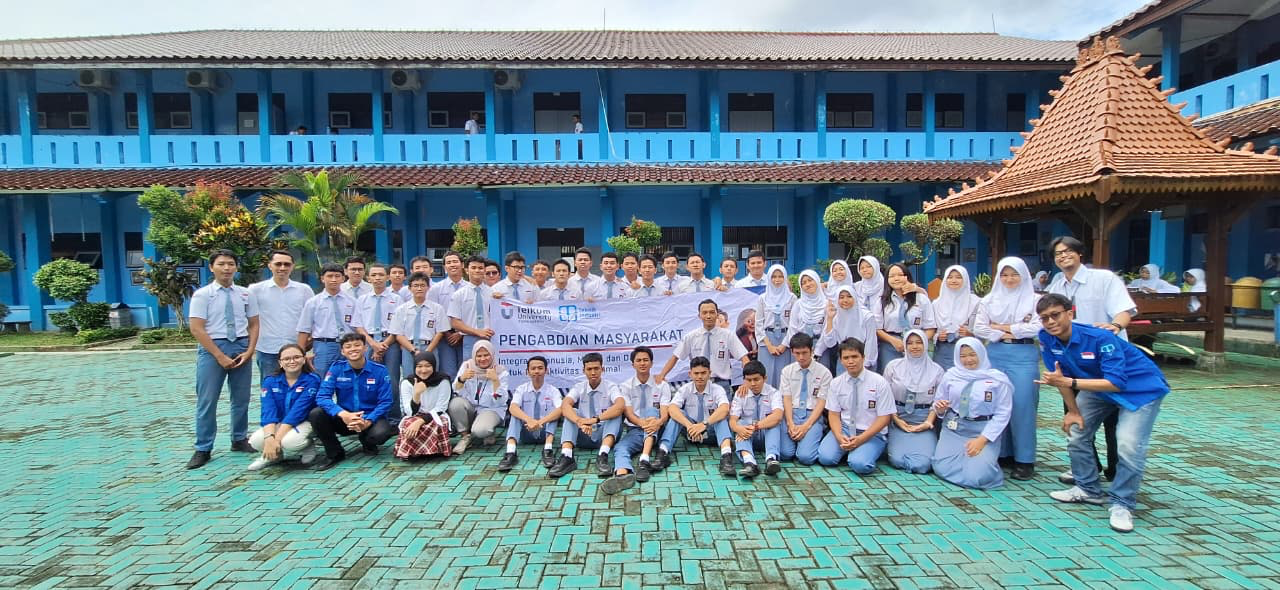
Perkembangan dunia industri menuntut sumber daya manusia yang memiliki kemampuan berpikir sistem dan pemahaman terhadap proses industri secara terintegrasi. Namun, pembelajaran di tingkat SMA masih cenderung bersifat konseptual sehingga siswa memiliki keterbatasan dalam memahami dinamika sistem industri dan pendekatan STEM. Kegiatan pengabdian masyarakat bertujuan untuk mengenalkan konsep simulasi industri serta memperkuat literasi STEM siswa SMA melalui pendekatan gamifikasi menggunakan Beer Game. Metode pelaksanaan dilakukan secara partisipatif melalui tahapan persiapan, pengenalan konsep sistem industri dan STEM, pelaksanaan simulasi Beer Game, serta evaluasi kegiatan, dengan sasaran siswa SMA kelas peminatan teknik. Hasil kegiatan menunjukkan bahwa simulasi Beer Game meningkatkan pemahaman siswa terhadap konsep sistem industri dan rantai pasok, mendorong keterlibatan aktif, serta mengembangkan kemampuan berpikir sistem, pengambilan keputusan. Umpan balik peserta menunjukkan tingkat kepuasan yang tinggi terhadap materi dan metode kegiatan. Dengan demikian, gamifikasi Beer Game berpotensi menjadi model pengabdian masyarakat berkelanjutan dalam penguatan literasi STEM di pendidikan menengah.
##plugins.themes.academic_pro.article.details##

This work is licensed under a Creative Commons Attribution-NonCommercial 4.0 International License.
JURPIKAT (Jurnal Pengabdian Kepada Masyarakat) accepts manuscripts that have not been published elsewhere and are not under consideration for publication by other print or electronic media. Authors retain copyright and grant the journal right of first publication with the work simultaneously licensed under a Creative Commons BY-NC License that allows others to share the work with an acknowledgment of the work's authorship and initial publication in this journal.
Authors are able to enter into separate, additional contractual arrangements for the non-exclusive distribution of the journal's published version of the work (eg, post it to an institutional repository, in a journal or publish it in a book), with an acknowledgment of its initial publication in this journal.
License to Publish
The non-commercial use of the article will be governed by the Attribution-NonCommercial 4.0 International (CC BY-NC 4.0). The author hereby grants JURPIKAT (Jurnal Pengabdian Kepada Masyarakat) an exclusive publishing and distribution license in the manuscript include tables, illustrations or other material submitted for publication as part of the manuscript (the “Articleâ€) in print, electronic and all other media (whether now known or later developed), in any form, in all languages, throughout the world, for the full term of copyright, and the right to license others to do the same, effective when the article is accepted for publication. This license includes the right to enforce the rights granted hereunder against third parties.
References
Amelia, U. (2023). Tantangan Pembelajaran Era Society 5.0 dalam Perspektif Manajemen Pendidikan. Al-Marsus : Jurnal Manajemen Pendidikan Islam, 1(1), 68. https://doi.org/10.30983/al-marsus.v1i1.6415
Budimansyah, B., & Axel, L. (2024). PENERAPAN STRATEGI PENGELOLAAN SUMBER DAYA MANUSIA DALAM MENGHADAPI TANTANGAN GLOBALISASI INDUSTRI. Jurnal Ilmiah Manajemen Ekonomi Dan Akuntansi, 1(Februari), 48–55. https://doi.org/XX..XXXXX/Jimea
Elza, P. (2025). Implementasi Gamifikasi dalam Sistem Pembelajaran Daring Berbasis Moodle. Jurnal Teknologi Dan Informatika Indonesia, 01(1), 35–44. http://pustakajurnal.web.id/index.php/jtii
Mulyadi, E. (2023). Penerapan PBL dalam Meningkatkan Aktivitas dan Prestasi Belajar Proyek IPAS di Sekolah Menengah Kejuruan. Ideguru: Jurnal Karya Ilmiah Guru, 8(3), 653–660. https://doi.org/10.51169/ideguru.v8i3.684
Purba, L. P., Irawati, D. Y., & Wulandari, L. M. C. (2025). Simulasi Sistem Produksi Robochop Dasar dengan ARENA. JOURNAL OF INDUSTRIAL AND MANUFACTURE ENGINEERING, 9(1), 78–88. https://doi.org/10.31289/jime.v9i1.14535
Rachmawati, N. L., & Dianisa, P. A. (2022). Model Simulasi Sistem Diskrit untuk Meminimasi Rata-rata Waktu Tunggu Truk (Studi Kasus PT. XYZ). Jurmatis (Jurnal Manaj. Teknol. DanTeknik Ind, 4(2), 122–136. https://doi.org/10.30737/jurmatis.v4i2.2371.g2308
Rozhkov, M., Alyamovskaya, N., & Zakhodiakin, G. (2025). The beer game bullwhip effect mitigation: a deep reinforcement learning approach. International Journal of Production Research, 63(18), 6630–6647. https://doi.org/10.1080/00207543.2025.2479831
Srimuliyani, S. (2023). Menggunakan Teknik Gamifikasi untuk Meningkatkan Pembelajaran dan Keterlibatan Siswa di Kelas. EDUCARE: Jurnal Pendidikan Dan Kesehatan, 1(1), 29–35.
Suherman, A., Firmansyah, Y., & Suherman. (2024). Manajemen Sumber Daya Manusia yang Efektif dan Efisien dalam Pendidikan di Era 5.0. Journal of Education Research, 1.
Widiansyah, S., Anam, A., Salsabilla, A. R. A., Efendi, N. K. P., Nakhlah, A. A., & Azzahra, R. (2024). EFEKTIVITAS PEMBELAJARAN BERBASIS MASALAH DALAM MENINGKATKAN PEMAHAMAN SISWA SMA PADA KURIKULUM MERDEKA. Jurnal Media Akademik (JMA), 2(12), 3031–5220. https://doi.org/10.62281
Wu, L., Wang, M., Kumar, A., & Choi, T. M. (2024). Mitigating the bullwhip effect through supply chain ESG transparency: roles of digitalization and signal strength. International Journal of Operations and Production Management, 44(9), 1707–1731. https://doi.org/10.1108/IJOPM-08-2023-0667