Penguatan Literasi Konfigurasi Jaringan Dasar pada Siswa SMA Annida melalui Praktik Bridge dan DHCP berbasis MikroTik RouterOS
##plugins.themes.academic_pro.article.sidebar##
Downloads
##plugins.themes.academic_pro.article.main##
Abstract
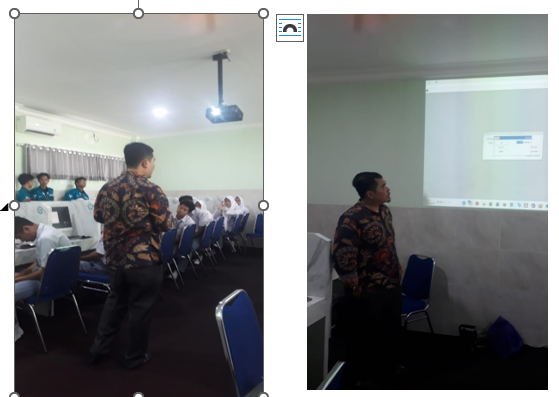
Digital-based learning in schools requires local network infrastructure that is not only connected but also properly configured and technically verifiable. However, at the student level, understanding of computer networks is often limited to using internet services without mastering basic configuration concepts such as IP addressing, gateway configuration, and automated IP distribution mechanisms. This community service activity aims to strengthen basic network configuration literacy among students at MTs Annida through structured practice of bridge and Dynamic Host Configuration Protocol (DHCP) configuration using MikroTik RouterOS. The implementation method adopts a Diagnosa Demonstrasi rill Debrief approach, which includes identifying students’ initial understanding, demonstrating configuration procedures, conducting structured hands-on practice, and reflecting on the results of the activities. The practical scenario covers creating a bridge, combining multiple LAN ports into a bridge interface, assigning an IP gateway to the bridge interface, configuring an address pool, activating the DHCP server, and verifying the client side through checking IP address, gateway, DNS, and connectivity tests. The evaluation was conducted using a pre-test and post-test design along with performance-based assessment using a rubric. The results show an increase in the average score from 51.63 to 74.63, indicating an improvement of approximately 44.5% after the training. Furthermore, students’ configuration skills improved as evidenced by successful technical verification during the practical activities. These findings indicate that practice-based network configuration learning is effective in improving students’ literacy and basic skills in computer networking.
##plugins.themes.academic_pro.article.details##

This work is licensed under a Creative Commons Attribution-NonCommercial 4.0 International License.
JURPIKAT (Jurnal Pengabdian Kepada Masyarakat) accepts manuscripts that have not been published elsewhere and are not under consideration for publication by other print or electronic media. Authors retain copyright and grant the journal right of first publication with the work simultaneously licensed under a Creative Commons BY-NC License that allows others to share the work with an acknowledgment of the work's authorship and initial publication in this journal.
Authors are able to enter into separate, additional contractual arrangements for the non-exclusive distribution of the journal's published version of the work (eg, post it to an institutional repository, in a journal or publish it in a book), with an acknowledgment of its initial publication in this journal.
License to Publish
The non-commercial use of the article will be governed by the Attribution-NonCommercial 4.0 International (CC BY-NC 4.0). The author hereby grants JURPIKAT (Jurnal Pengabdian Kepada Masyarakat) an exclusive publishing and distribution license in the manuscript include tables, illustrations or other material submitted for publication as part of the manuscript (the “Articleâ€) in print, electronic and all other media (whether now known or later developed), in any form, in all languages, throughout the world, for the full term of copyright, and the right to license others to do the same, effective when the article is accepted for publication. This license includes the right to enforce the rights granted hereunder against third parties.
References
Effendi, D., Dhaniawaty, R. P., Hidayat, R., & Alghani, M. (2025). Peningkatan Kapasitas Pengurus Masjid Melalui Pelatihan Sistem Informasi Manajemen Masjid ( SIMMAS ) Berbasis Web pada DKM Khairul Amal Kota Bandung. JURPIKAT, 6(3), 1447–1455.
Erina, F. (2022). IMPLEMENTASI PEMBELAJARAN BERBASIS TEKNOLOGI INFORMASI DAN KOMUNIKASI DENGAN MENGGUNAKAN KOMPUTER MULTIMEDIA DALAM PEMBELAJARAN PAI DI SDIT MUTIARA KOTA PARIAMAN. INOVASI, 1(2).
Imron, M., Indartono, K., Informatika, S., Komputer, F. I., & Purwokerto, U. A. (2022). Pelatihan Perakitan Komputer Dan Instalasi Software Dalam Meningkatkan Kemandirian Remaja di Desa Karangturi Banyumas. DINAMISIA, 6(3), 633–641.
Irhamulloh, A. F., Abdillah, M. F., Satrio, D., & Utomo, I. (2025). Analisis Komparatif Implementasi DHCP Server pada Platform MikroTik dan Linux untuk Manajemen Jaringan. JAITS, 2(1), 12–16.
Junaid, R., & Baharuddin, M. R. (2020). Peningkatan Kompetensi Pedagogik Guru melalui PKM Lesson. To Maega, 3(2), 122–129.
Mi, D., Hasan, D., Jatnika, H., Rifai, M. F., Fitriani, Y., Anggrainie, M. T., Khair, Z. Al, Nash, M. N., Anastasya, T., Fransisco, J. A., Rambe, A. A., Sinaga, G. A., Siagian, Y., Stendel, L. B., Azis, A., Putri, R., Rusdi, A., Permata, A. M., Akbar, M. T., … Syalomitha, R. (2024). Pengenalan Teknologi Komputer Kepada Siswa Sekolah Dasar MI Darul Hasan Tangerang-Banten. JURPIKAT, 5(1), 299–306.
Pemrograman, P., Menengah, S., & Jayapura, K. (2019). ABDIMAS PKM Peningkatan Kompetensi Guru dan Siswa Melalui. ABDIMAS, 23(2), 92–98.
Prasetyo, F., Putra, E., Mufidah, K., Ilhamsyah, R. M., Ananta, S., Nur, S., & Barokah, R. (2023). Tinjauan Performa RouterOS Mikrotik dalam Jaringan Internet : Analisis Kinerja dan Kelayakan. Digitech, 3(2), 903–910.
Pratama, A. (2022). STRATEGI PEMBELAJARAN BERDIFERENSIASI UNTUK MENINGKATKAN KEMAMPUAN LITERASI MEMBACA PEMAHAMAN SISWA. Jurnal Didaktika Pendidikan Dasar, 6(2), 605–626. https://doi.org/10.26811/didaktika.v6i2.545
Sunarti, S. (2024). TRANSFORMASI PEMBELAJARAN DIGITAL DENGAN ARTIFICIAL. Jurnal Perspekti, 17(1), 85–96.
Verawati. (2025). PENGGUNAAN MEDIA KONKRIT DALAM PEMBELAJARAN KETERAMPILAN PEDAGOGIK MAHASISWA CALON GURU SD / MI. NIZHAMIYAH, XVI(2), 184–194.
Yusra. (2025). Pemanfaatan Platform Digital dalam Meningkatkan Mutu Pendidikan. Dirasah, 8(1), 393–405.
Zayyadi, M., Supardi, L., Misriyana, S., & Pembelajaran, M. (2017). Pemanfaatan teknologi komputer sebagai media pembelajaran pada guru matematika. Jurnal Pengabdian Masyarakat Borneo, 25–30.